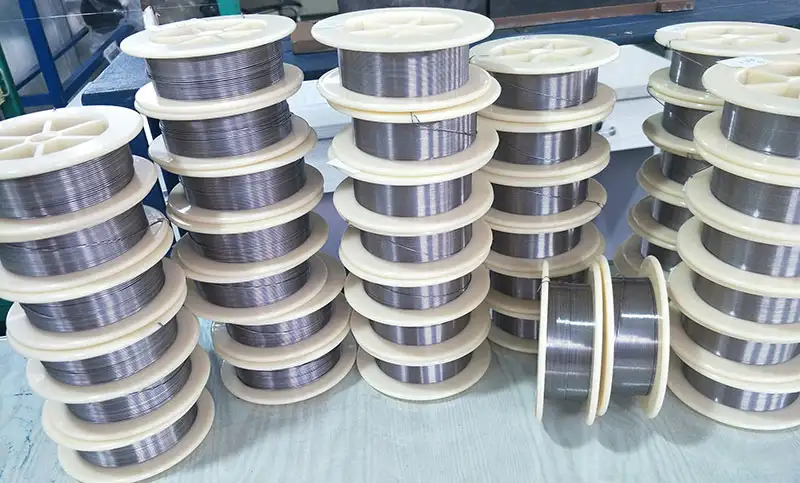
Molybdenum powder is a critical raw material in high‑performance metallurgy, electronics, and aerospace applications. Selecting the right powder—balancing production method and purity level directly impacts product performance, cost, and process reliability. This guide provides a technical comparison of the three dominant production techniques, a clear explanation of purity grades, and actionable advice for procurement professionals. Whether you are sourcing for thermal spray coatings, sputtering targets, or powder metallurgy components, understanding these parameters will enable informed decisions. Better Metal, with over a decade of specialization, offers tailored solutions across all purity requirements.
Each method yields distinct particle morphology, size distribution, and impurity profiles. The following analysis focuses on the three most commercially relevant processes.
The most widely adopted method, accounting for over 80% of global production. High‑purity MoO3 is reduced in a two‑stage belt furnace: first at 400–500°C to MoO2, then at 900–1100°C to metallic Mo powder. The process produces fine, irregular particles with high surface area, ideal for pressing and sintering. Key advantages include consistent chemistry and controllable particle size from 0.5 to 10 µm. Better Metal employs proprietary temperature profiling to achieve uniform crystallinity.
Used primarily for thermal spray applications. Fine hydrogen‑reduced powder is slurried with binders, spray‑dried into spherical agglomerates, then sintered to increase strength. The resulting powders exhibit excellent flowability and apparent density (2.5–4.0 g/cm³). Particle size ranges from 15 to 150 µm. This method sacrifices a slight increase in oxygen content (0.2–0.5 wt%) for superior handling characteristics.
Used for lower‑cost, industrial‑grade powder, often containing residual Al or Cr. This exothermic process yields coarser particles (10–100 µm) with higher impurity levels (>1 wt%). It is rarely selected for demanding applications due to unpredictable chemistry. Buyers should verify trace element limits when evaluating this route.
Molybdenum powder is categorized by metallic impurity content and gaseous elements (O, N, C). The table below outlines standard grades.
Purity directly influences electrical resistivity, thermal conductivity, and corrosion resistance. For instance, a 0.1 wt% iron increase can reduce creep resistance by 15% at 1000°C. Better Metal offers laser‑ablation ICP‑MS analysis on every batch, ensuring traceability from ore to powder.
When choosing a supply partner, evaluate these six parameters:
Better Metal maintains a vertical supply chain—from ammonium molybdate to finished powder—eliminating intermediate contamination risks. All products pass ASTM B709 and MPIF Standard 35 testing.
As a dedicated molybdenum powder supplier, Better Metal integrates quality control at every step:
Our technical team assists in selecting the optimal grade for your specific process—whether you require free‑flowing agglomerates for HVOF spraying or fine, low‑oxygen powder for P/M sintering. Custom particle size cuts (e.g., –325 mesh +10 µm) are available with rapid turnaround.
By balancing production technique with the necessary purity, you reduce waste, improve yield, and extend equipment life. Contact Better Metal for sample testing and a comparative cost analysis tailored to your application.
Share this page
If you have any product needs or questions, please leave us a message for consultation.
TEL: 86-18623759992
jason@bettmetal.com

Innovating Materials
for a Brighter Future