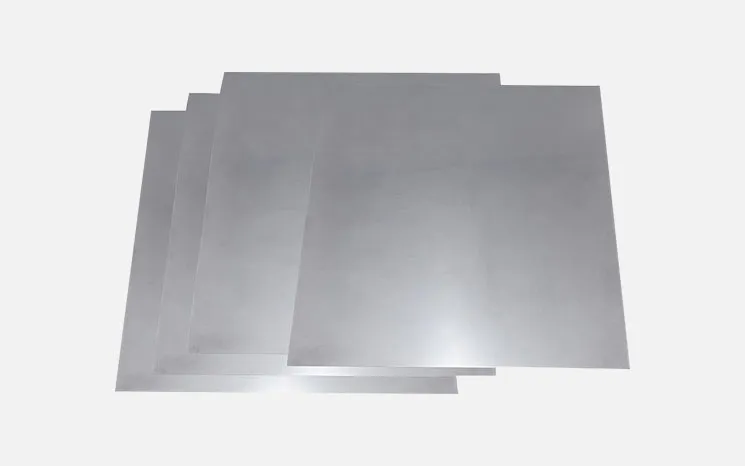
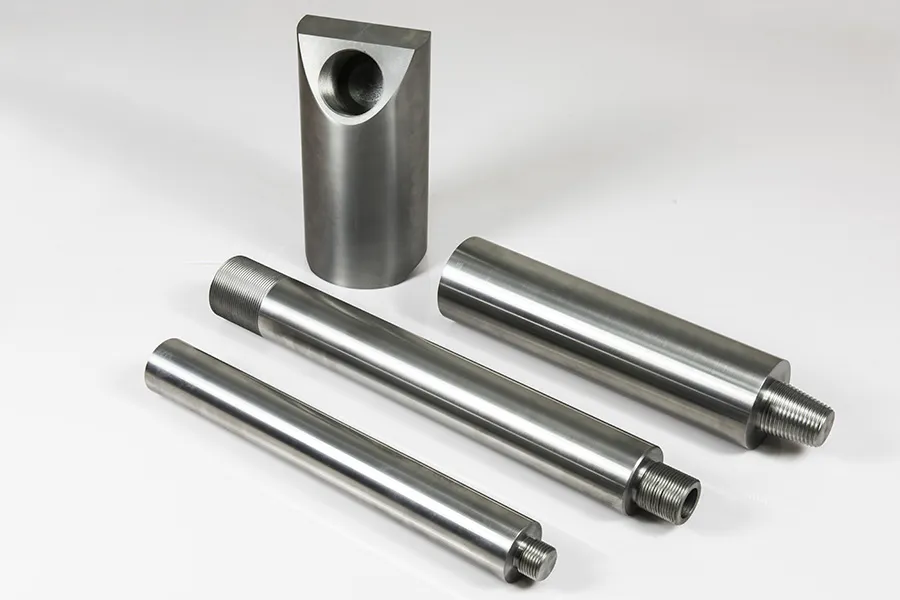
Molybdenum rods and sheets are fundamental components in high-temperature and high-stress industrial environments, ranging from semiconductor manufacturing to aerospace engineering. Understanding their precise technical specifications—including purity levels, density, tensile strength, and dimensional tolerances—is critical for engineers and procurement professionals who must ensure long-term reliability and performance. This guide provides a detailed examination of molybdenum rod and sheet properties, common standards, and practical selection considerations, with insights from Better Metal, a trusted supplier in the refractory metals industry.
Molybdenum is a refractory metal with a melting point of 2,623 °C (4,753 °F), making it ideal for applications that demand stability under extreme thermal loads. Its density is approximately 10.22 g/cm³, which is about half that of tungsten but still provides substantial strength and wear resistance. The material exhibits excellent thermal conductivity (138 W/m·K) and a low coefficient of thermal expansion (4.8 × 10⁻⁶ /°C), reducing the risk of dimensional distortion during thermal cycling.
Standard molybdenum rods and sheets are available in purities ranging from 99.5% to 99.99% (Mo≥99.95% is common for most technical applications). Lower purities may contain trace elements like iron, nickel, or carbon, which can affect machinability and high-temperature performance. For specialized uses, such as sputtering targets or glass melting electrodes, high-purity molybdenum (99.97% or higher) is recommended. Alloyed variants like TZM (titanium-zirconium-molybdenum) and MHC (molybdenum-hafnium-carbon) offer improved creep resistance and recrystallization temperature.
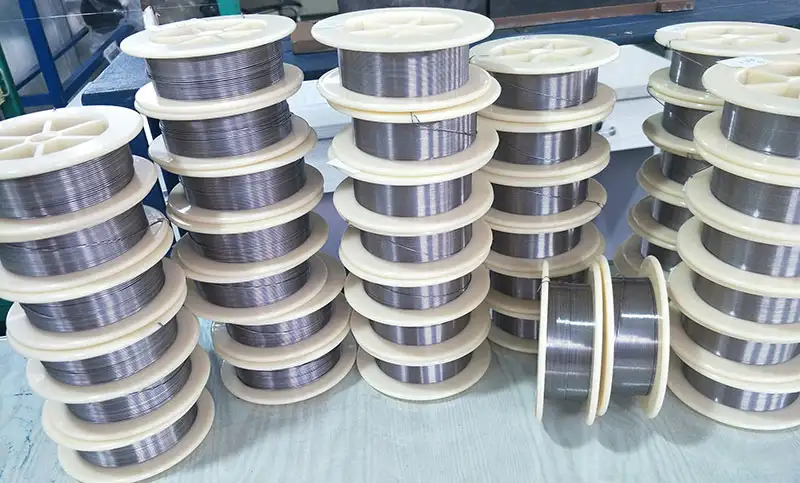
Molybdenum rods are typically manufactured via powder metallurgy or arc casting, then hot-worked (forged or rolled) to achieve desired mechanical properties. Dimensions are specified by diameter and length, with standard tolerances following ASTM B387 (for molybdenum and molybdenum alloy rod).
Annealed molybdenum rods have a typical tensile strength of 600–800 MPa and yield strength of 350–550 MPa at room temperature. After recrystallization annealing, strength decreases but ductility improves. Hardness values range from 200–350 HV (Vickers) depending on the processing condition. For high-stress applications, stress-relieved or unannealed rods provide higher strength (up to 1,000 MPa).
Molybdenum sheets are rolled from sintered or cast billets and are available in various thicknesses. Key standards include ASTM B386 (for molybdenum sheet, strip, and plate).
Critical for semiconductor and vacuum applications, flatness is typically ≤ 0.5 mm per 100 mm for cold-rolled sheets. Surface defects such as pits, scratches, or delamination are strictly controlled. Better Metal offers certified surface inspection reports upon request.
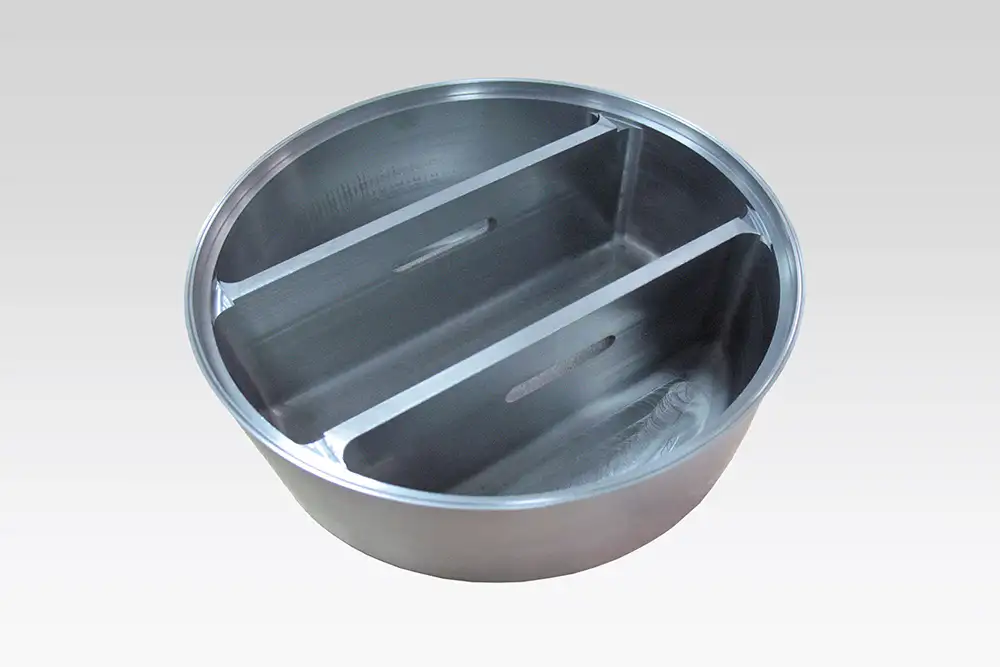
The distinct properties of molybdenum rods and sheets make them indispensable in several sectors:
When specifying molybdenum rods and sheets, engineers must evaluate operating temperature, load conditions, corrosion environment, and machining requirements. For example, if the application involves cyclic heating, a recrystallization-resistant alloy like TZM is advisable. If pure molybdenum is used, ensuring proper grain structure via controlled working and annealing is essential to avoid embrittlement.
Better Metal has supplied precision molybdenum products for over a decade, adhering to strict ASTM/ASTM-11 standards. Their materials come with full traceability, including chemical analysis certificates and dimensional inspection reports. Unlike many suppliers, Better Metal offers custom machining services—from cutting rods to specific lengths to drilling complex patterns in sheets. Their experienced technical team helps customers select the correct grade, temper, and surface finish, reducing trial-and-error procurement cycles.
Better Metal implements 100% ultrasonic testing for critical rods and sheets to detect internal flaws. Surfaces are inspected with automated optical systems, ensuring defect-free delivery. With inventory stocked in multiple global warehouses, lead times are typically 2–3 weeks for standard items.
Yes, but it requires careful preheating and a controlled inert atmosphere (argon or helium) due to molybdenum’s sensitivity to oxygen at high temperatures. TIG welding with molybdenum filler is common for thin sections.
Powder metallurgy (PM) molybdenum has finer grain size and better homogeneity, making it suitable for thin sheets and precision parts. Arc-cast molybdenum offers larger ingot sizes and is often used for thick plates and large rods. Both meet typical purity requirements.
Absolutely. Every shipment includes a material certificate conforming to EN 10204 Type 3.1, with full chemical and mechanical properties reported. Additional 3.2 certificates can be arranged for critical orders.
Selecting the right molybdenum rods and sheets requires a clear understanding of technical specifications—density, purity, tolerances, and mechanical properties—matched to the application’s demands. Whether you need standard diameters for heating elements or ultra-flat sheets for semiconductor tooling, partnering with a reliable supplier like Better Metal ensures consistent quality and technical support. Review your project requirements, consult the data sheets, and choose a material solution that will perform reliably under the most challenging conditions.
Share this page
If you have any product needs or questions, please leave us a message for consultation.
TEL: 86-18623759992
jason@bettmetal.com

Innovating Materials
for a Brighter Future