High-performance alloys must withstand extreme conditions—intense heat, corrosive chemicals, and sustained mechanical stress. Among the alloying elements that enable these capabilities, molybdenum stands out for its unique ability to simultaneously enhance strength, hardenability, and corrosion resistance. Without molybdenum, many critical components in aerospace, energy, and chemical processing would fail prematurely. This article explores the metallurgical reasons behind molybdenum's indispensability and how Better Metal leverages its expertise to deliver superior molybdenum-containing alloys for demanding applications.
Molybdenum, with a melting point of 2,623 °C (4,753 °F), is one of the highest-melting elements used in commercial alloys. When added to steel or nickel-based alloys, it fundamentally alters the microstructure:
These mechanisms are the foundation for molybdenum's role in alloys that must retain mechanical properties at temperatures above 500 °C, where conventional steels soften rapidly.
In stainless steels and superalloys, molybdenum works in synergy with chromium and nickel. Chromium provides a passive oxide layer; molybdenum stabilizes that layer in reducing environments and enhances resistance to localized corrosion such as pitting and crevice attack. The Pitting Resistance Equivalent Number (PREN) formula—%Cr + 3.3×%Mo + 16×%N—explicitly weights molybdenum 3.3 times more than chromium, reflecting its outsized impact in chloride-rich media.
Two factors dominate the failure modes of components in aggressive service: thermal creep and corrosion. Molybdenum addresses both.
In power plant superheaters, gas turbine blades, and petrochemical reformer tubes, alloys must sustain long-term loads at temperatures above 600 °C. Molybdenum-rich alloys, such as Hastelloy X (9% Mo) or Inconel 625 (9% Mo), exhibit significantly lower creep rates than their low-molybdenum counterparts. The molybdenum content refines the gamma-prime precipitates in nickel-base superalloys and stabilizes the matrix against recrystallization.
Offshore oil and gas equipment, desalination plants, and chemical reactors face aggressive chloride environments. Austenitic stainless steels without molybdenum (e.g., 304L) suffer rapid pitting. Adding just 2–3% molybdenum creates grades like 316L (2.5% Mo) and 317L (3.5% Mo), dramatically raising the critical pitting temperature. For extreme environments, superaustenitic grades with 6% Mo (e.g., 254 SMO) or nickel alloys with up to 15% Mo provide virtually immunity to chloride stress corrosion cracking.
Jet engine hot-section components—turbine blades, vanes, and combustion liners—rely on nickel-base superalloys containing 3–10% molybdenum. The molybdenum contributes to both high-temperature strength and oxidation resistance. Rocket nozzles and thrust chambers often use molybdenum alloys like TZM (titanium-zirconium-molybdenum) for their incredible thermal shock resistance and ability to survive re-entry temperatures.
Reactors, heat exchangers, and piping systems handling sulfuric acid, hydrochloric acid, or chlorinated hydrocarbons require alloys that resist general corrosion and hydrogen embrittlement. Better Metal supplies Hastelloy C-276 (16% Mo) and C-22 (13% Mo) for these applications, offering unmatched resistance to both oxidizing and reducing media.
Supercritical and ultra-supercritical power plants operate at steam temperatures exceeding 700 °C. Traditional Cr-Mo steels (e.g., P91, T91) contain about 1% Mo; advanced alloys for next-generation boilers push molybdenum to 3–5% to achieve the necessary creep rupture strength. In nuclear reactors, molybdenum alloyed with titanium and zirconium is used for control rods and structural components due to its low thermal neutron absorption cross-section and high strength at temperature.
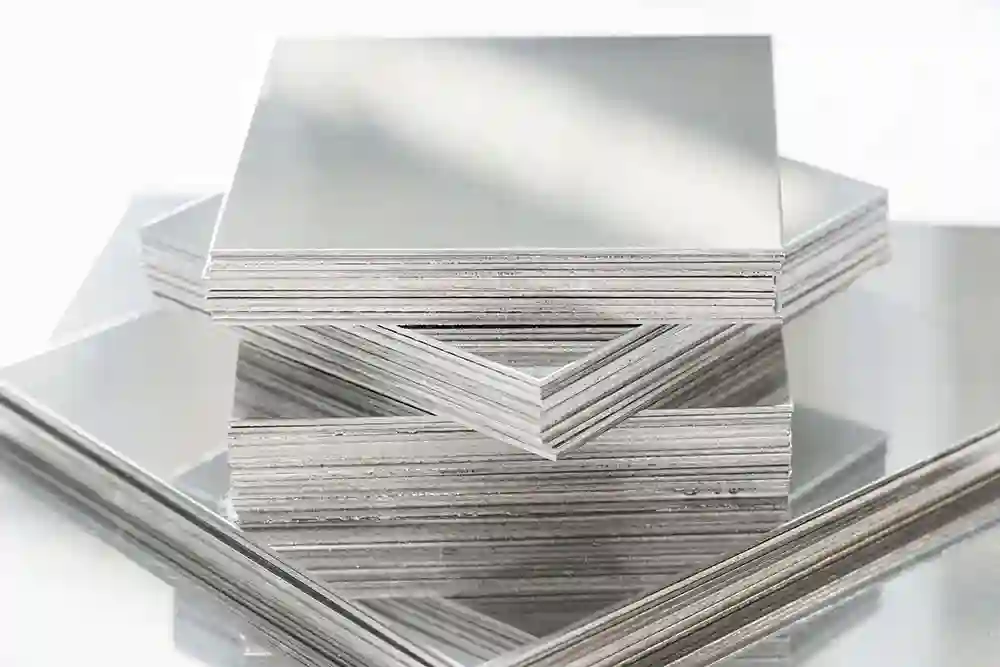
Better Metal has specialized in sourcing and distributing molybdenum-bearing alloys for over a decade. Our inventory includes:
We understand that every application demands precise chemistry. Our team provides certified material test reports (MTRs) and can advise on selecting the optimal grade based on operating temperature, corrosive environment, and mechanical loading. Whether you need a small batch for prototype testing or a full production run, Better Metal ensures consistent quality and on-time delivery.
In summary, molybdenum's ability to enhance strength, corrosion resistance, and high-temperature performance makes it an irreplaceable alloying element in modern engineering. From aerospace turbines to chemical reactors, components that must perform reliably under extreme conditions depend on the precise inclusion of molybdenum. Better Metal is your partner in selecting and supplying these critical alloys—contact us to discuss your next project.
Share this page
If you have any product needs or questions, please leave us a message for consultation.
TEL: 86-18623759992
jason@bettmetal.com

Innovating Materials
for a Brighter Future